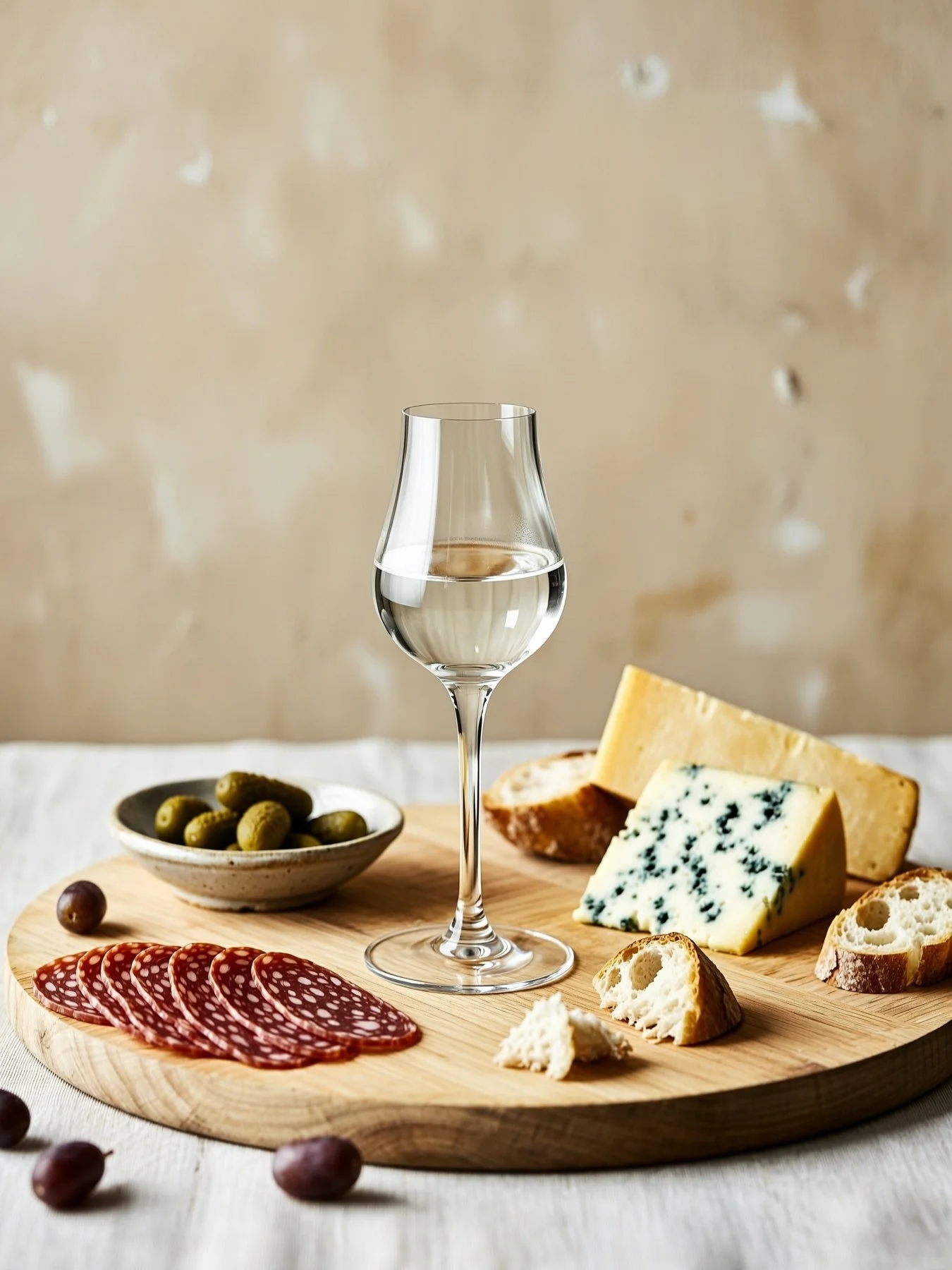
A charcuterie board is a difficult thing to pour for, and most advice ignores why. It is not one dish. Smoked salmon, a hard sheep's cheese, a wedge of Stilton, fennel salami and a bowl of cornichons are four or five completely different pairing problems sitting on the same piece of wood. A wine chosen for the ham will be wrong for the blue cheese. Rather than pick a compromise, it is worth understanding what the board is actually doing to your palate.
The four things on the board, and what each one needs
Salt and fat — cured meats. Prosciutto, salami, coppa. Fat coats the mouth and salt builds up across a session. Both need cutting, either with acidity or with alcohol. This is the easiest part of the board to pair and the reason a crisp white or a light red usually gets picked.
Smoke — salmon and trout. Smoke is persistent and lingers longer than anything else on the board. It clashes badly with oak, because you end up with two kinds of smoke arguing. Smoked fish also brings an oily texture that needs clearing rather than matching.
Funk — blue cheese. Stilton, Roquefort, Fourme d'Ambert. High salt, high fat, and an ammoniac sharpness that flattens most dry wines completely. This is why the traditional match is sweet: Sauternes with Roquefort, port with Stilton. Sweetness is one solution. Strength is the other, and it is the one people forget.
Acid — the pickles. Cornichons, capers, pickled onions. They are on the board precisely to reset your palate between mouthfuls, which means they are doing part of your drink's job already. Worth knowing, because it means you need less from the glass than you would think.
Why one wine struggles to cover it
The usual recommendations each solve one part of the board. A dry Riesling handles the salt and the smoke well but disappears under Stilton. A light Gamay or Beaujolais is good with the salami and awkward with the salmon. Sherry — particularly a dry oloroso or amontillado — is genuinely the best single wine answer, because the nuttiness handles the cheese and the acidity handles the fat. It remains an underrated choice.
But there is a structural point here. What all the successful pairings share is not a flavour, it is a mechanism: they either cut through fat and salt, or they meet the funk with enough intensity to survive it. A spirit does both, more efficiently than a wine, because it brings more alcohol to the cutting job in a much smaller volume.
The board resets your palate with pickles. The glass should do the same thing, and leave fruit behind.
The case for an unaged brandy
Blanche Armagnac is unusually well suited to this, and it comes down to what is not in it.
It is Armagnac bottled without barrel ageing, distilled from Folle Blanche grapes and left clear. No oak means no wood smoke to fight the smoked fish, and no tannin to collide with the salt. What you get instead is white stone fruit, pear and a floral lift, at 40%.
Across the board that plays out three ways. Against cured meat, the alcohol cuts the fat and the fruit reads almost like the fruit paste people serve alongside ham anyway. Against smoked salmon and trout, it does what a squeeze of lemon does — clears the oil, lifts the smoke, does not add to it. And against blue cheese it holds up, because at 40% it has the intensity to meet the funk head-on rather than being erased by it. That is the same reason a strong spirit works with Stilton where a dry wine fails, without bringing the sweetness of port.
The regional logic supports it too. Gascony is charcuterie country — Bayonne ham, duck, confit — and the local spirit evolved alongside the local food.
How to serve it
Lightly chilled, around twenty minutes in the fridge. Colder than room temperature but not fridge-cold: too cold and the fruit closes up, and fruit is what makes this work rather than plain alcohol.
Small stemmed glasses, 25 to 35ml each. A tulip or a small wine glass is better than a tumbler. Serve it alongside whatever else is on the table rather than instead of it — a board is grazed over an hour or two, and a bottle of wine plus a small pour of spirit is a more realistic setup than spirits alone.
The board serve
- 35ml Elusa Blanche Armagnac, lightly chilled
- A strip of lemon peel, expressed over the glass and discarded
- Served alongside the board, not after it
The lemon peel is optional but it sharpens the fruit and makes the spirit read as a table drink rather than a digestif. If you would rather serve something longer, an Aromatic Tonic — Blanche, good tonic, a strip of orange peel — works across the whole board and lasts the session better.
Pairing by item
Smoked salmon and trout. Chilled unaged brandy, or a dry Riesling. Avoid anything oaked, and avoid peated whisky unless you specifically want smoke on smoke.
Blue cheese. Port and Sauternes if you want sweet. An unaged brandy at full strength if you do not. Both work for the same reason: they can stand up to it.
Hard sheep and goat cheeses. These are the most flexible things on the board. Almost anything dry and acidic works.
Cured meats. Fat plus salt wants acid or alcohol. Light red, dry sherry, or a spirit.
Pâté and rillettes. The richest item on most boards. This is where a spirit is most obviously better than a wine — it cuts through in a way that no amount of acidity manages.
What to avoid
Heavily oaked anything. Oak plus smoked fish is the worst combination on the board, and oak plus salt is not far behind.
Big tannic reds. Tannin and salt amplify each other and the wine turns astringent. A Cabernet with a salami board is harder work than it sounds.
Anything delicate. A light, subtle white gets erased by the third mouthful. Whatever you pour needs enough presence to survive an hour of salt.
The short answer
If you want one bottle of wine for a board, buy a dry amontillado sherry — it is the most complete single answer and almost nobody serves it. If you want the thing that handles the smoked fish and the Stilton equally well, pour a small glass of something clear, unaged and strong. It cuts the fat, survives the funk, and does not bring oak anywhere near the smoked salmon.
For the table
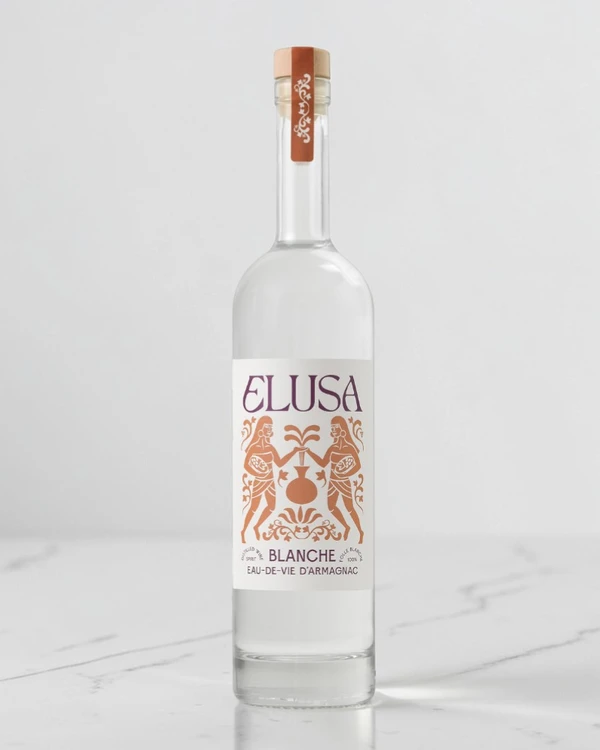
Elusa Blanche Armagnac. 700ml, 40% ABV. Great Taste 2-star. Folle Blanche grapes, unaged, from a family estate in Gascony. Shipped across the UK.