
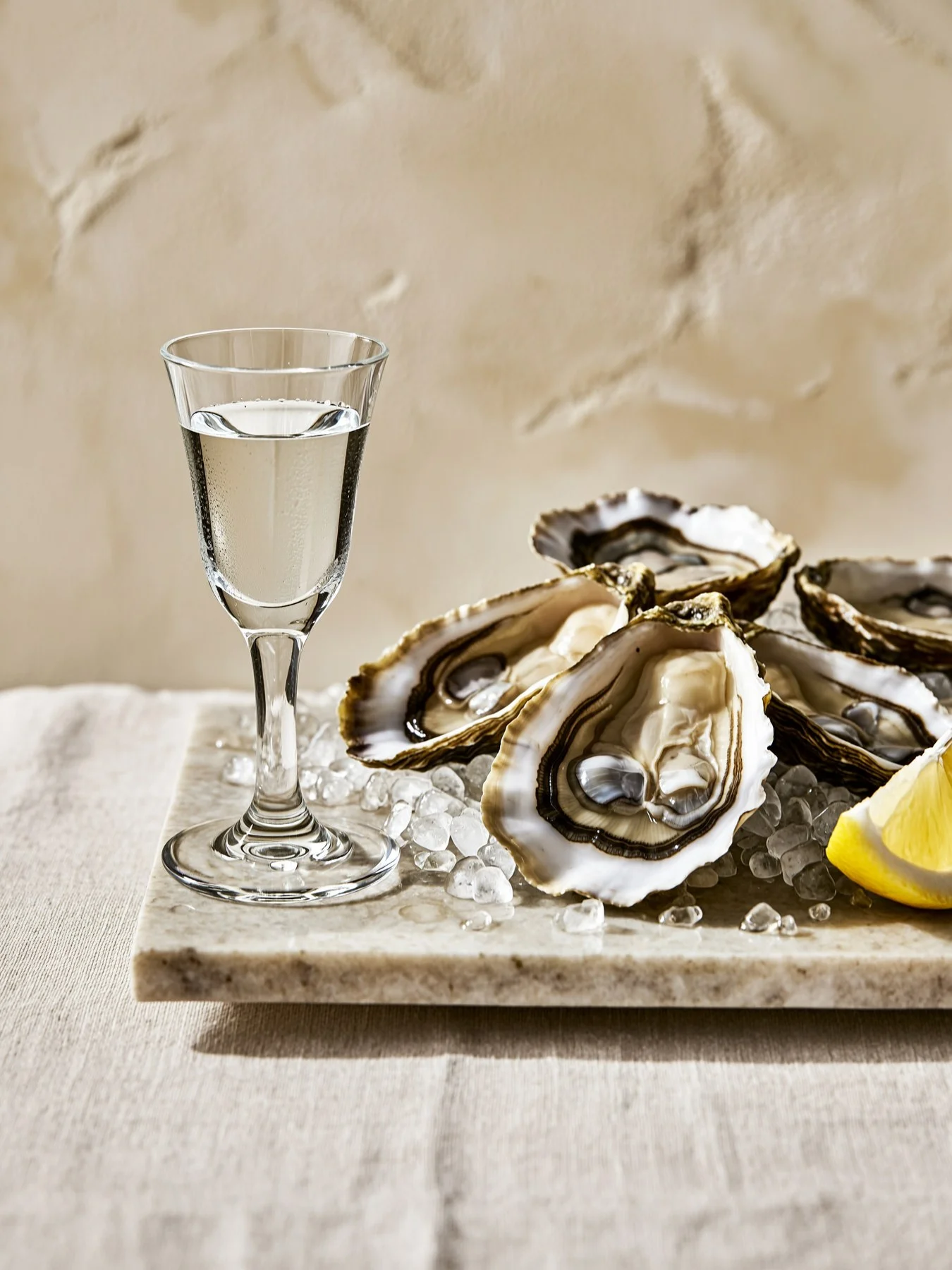
Ask what to drink with oysters and you will be told Muscadet, Chablis or Champagne. All three work. But wine is not the only answer and, depending on how you like your oysters, it is not always the best one. In Bordeaux they drink oysters with a cold glass of white wine and a hot sausage. In Scandinavia they drink them with aquavit. In Gascony, where the oysters come up from Arcachon, the answer has always been a small glass of something clear and cold.
What an oyster actually needs from a drink
An oyster is saline, mineral, and faintly sweet, with a texture that coats the mouth. Whatever you drink alongside it has three jobs: cut the salinity, clear the texture, and get out of the way. That last one is the reason so many pairings fail. Oyster flavour is delicate and short — it does not survive being buried.
The traditional wine choices earn their place because they are high in acid, low in oak and low in residual sugar. Muscadet in particular has a chalky, almost saline quality that mirrors the oyster rather than competing with it.
There is one wine problem worth knowing about. Sulphites, added to most wines as a preservative, can react with the iodine and minerality of a raw oyster and produce a distinctly metallic taste. If you have ever had a mouthful of white wine turn tinny straight after an oyster, that is usually why — not the oyster, and not your palate.
The traditional options, honestly assessed
Muscadet. The classic and still the best-value answer. Look for sur lie on the label, which adds a little texture without adding weight.
Chablis. Works for the same reasons but costs more. Avoid anything oaked — Premier Cru and above often is, and the oak flattens the oyster.
Champagne. Genuinely excellent, mostly because of the bubbles and the acid. Go for Brut Nature or Extra Brut if you can. Standard Brut carries more sugar than people realise and it can make the oyster taste oddly sweet.
Stout. The Irish pairing, and it works far better than it sounds. The roast bitterness and the creamy texture sit well against a big, meaty native oyster. It overwhelms a small delicate one.
Vodka. The Eastern European and Nordic answer, served very cold in a small glass. It cuts cleanly and never competes, because there is almost nothing there to compete with. That is its strength and also its limitation — it clears the palate but gives nothing back.
A neutral spirit clears the palate. An unaged brandy clears it and leaves fruit behind.
The case for an unaged brandy
This is where Blanche Armagnac does something vodka cannot. It is Armagnac that has never been in a barrel — distilled from Folle Blanche grapes and bottled clear, so you get the grape distillate with no oak, no vanilla and no tannin. Tannin is what makes an aged brandy fight with shellfish; there is none of it here.
What is left is white stone fruit, pear and a gentle floral lift, at full 40% strength. Against an oyster that means the alcohol does the cutting — the same job vodka does — while the fruit gives you something to taste afterwards. The oyster's salinity and the spirit's fruit meet in the middle, which is the same principle behind a squeeze of lemon, just with more to it.
Two practical notes. Ours is distilled without sulphite addition, so it sidesteps the metallic reaction that catches people out with wine. And at 40% it is strong, which is the point: you want a small measure that cuts, not a glassful.
How to serve it
Cold, but not frozen. Twenty minutes in the fridge, or ten in the freezer — no longer. Over-chilling shuts down the fruit and you are back to drinking something that only cuts.
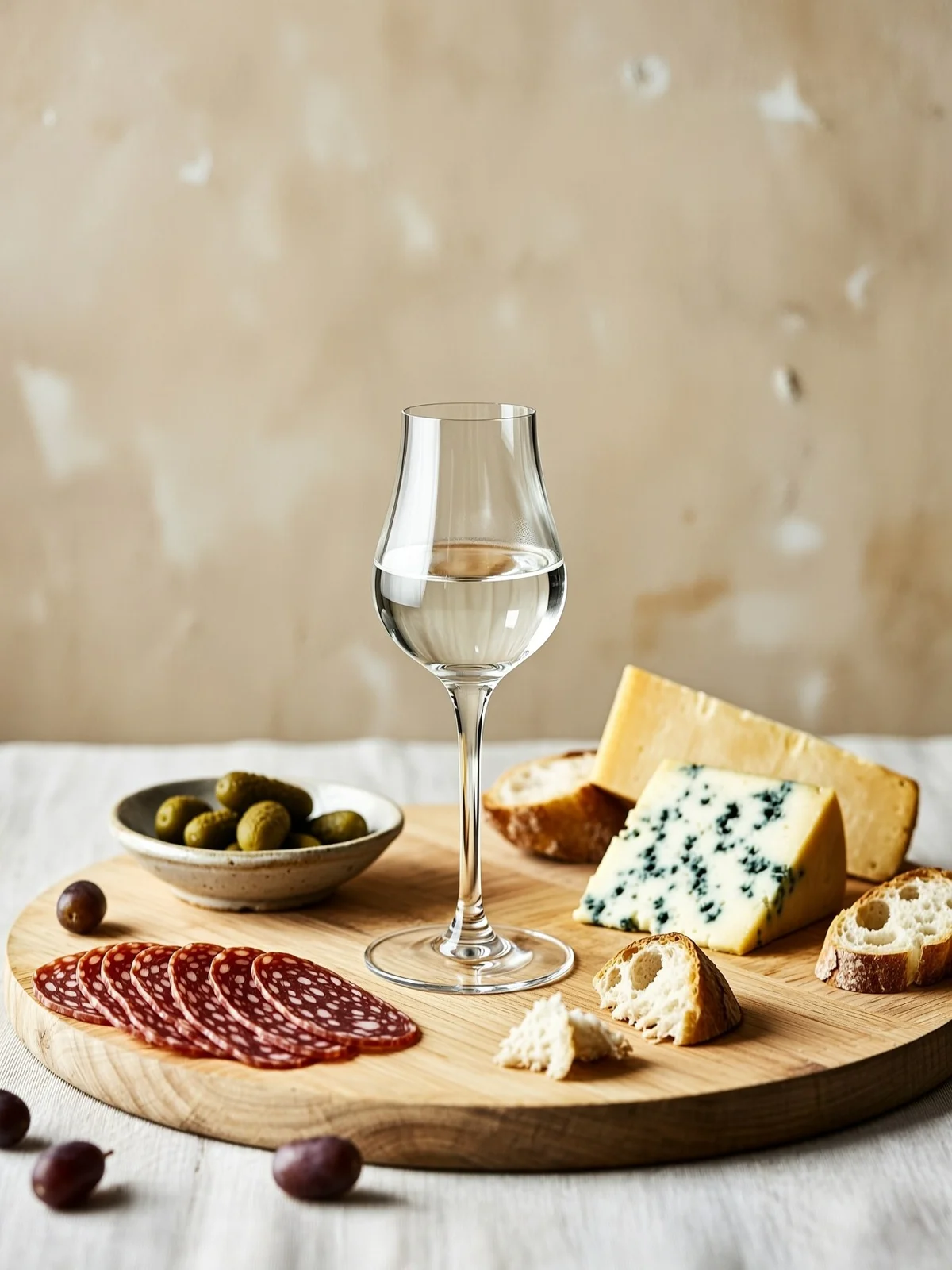
Pour 25ml into a small stemmed glass, not a tumbler and not a shot glass. The stem keeps your hand off the bowl, and the shape lets you smell it. This is a sipping pour taken between oysters, not a chaser.
Skip the mignonette if you are serving a spirit alongside. Shallot vinegar and a fruit-forward brandy both want the same job, and together they crowd the oyster out. Lemon is fine. Tabasco is fine if that is your habit, though it will flatten everything you drink for a minute afterwards.
The oyster serve
- 25ml Elusa Blanche Armagnac, chilled
- 6 oysters on ice
- A wedge of lemon
- Rye or good sourdough, buttered, optional but traditional
Eat the oyster, then sip. Not the other way round — spirit first coats the mouth and mutes the first oyster of the round.
Caviar, briefly
The same logic holds, and the Russian and Nordic tradition of serving caviar with a cold clear spirit is older than the Champagne convention. Caviar is fattier and more persistent than an oyster, so the cutting job matters more and the fruit matters less. A well-chilled unaged brandy handles it. Keep the measure small, keep it cold, and do not put it near anything oaked.
What to avoid
Aged brandy, whisky, dark rum. Oak tannin plus iodine is an unpleasant combination. This is the single most common mistake.
Anything sweet. Sugar against salinity makes the oyster taste like seawater.
Heavily oaked white wine. Same problem as aged spirits, milder.
Gin, usually. Juniper is assertive and botanical gins more so. It is not undrinkable, but the oyster loses.
The short answer
If you want the safe pairing, buy a bottle of Muscadet. If you want the one that makes people at the table ask what they are drinking, pour something clear, cold and unaged. It is the older tradition, it comes from the same part of France as some of the best oysters in Europe, and it does more than simply get out of the way.
Try it with a dozen
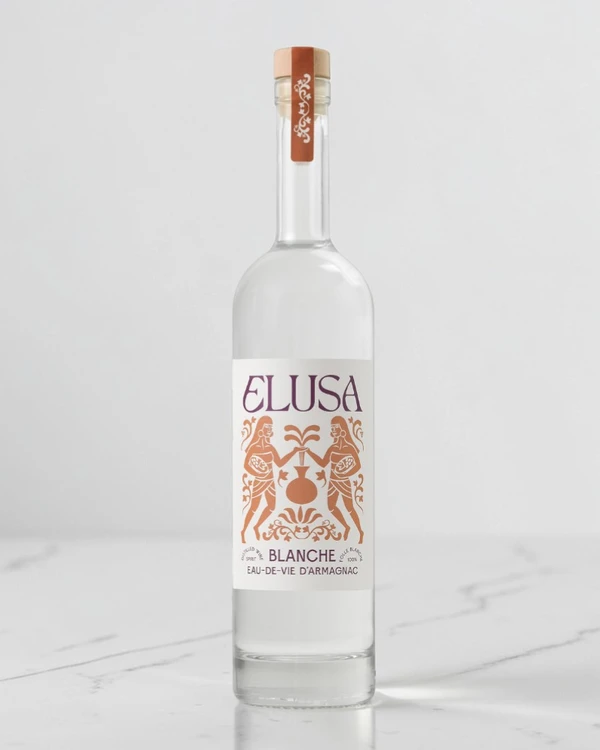
Elusa Blanche Armagnac. 700ml, 40% ABV. Great Taste 2-star. Folle Blanche grapes, unaged, from a family estate in Gascony. Shipped across the UK.