
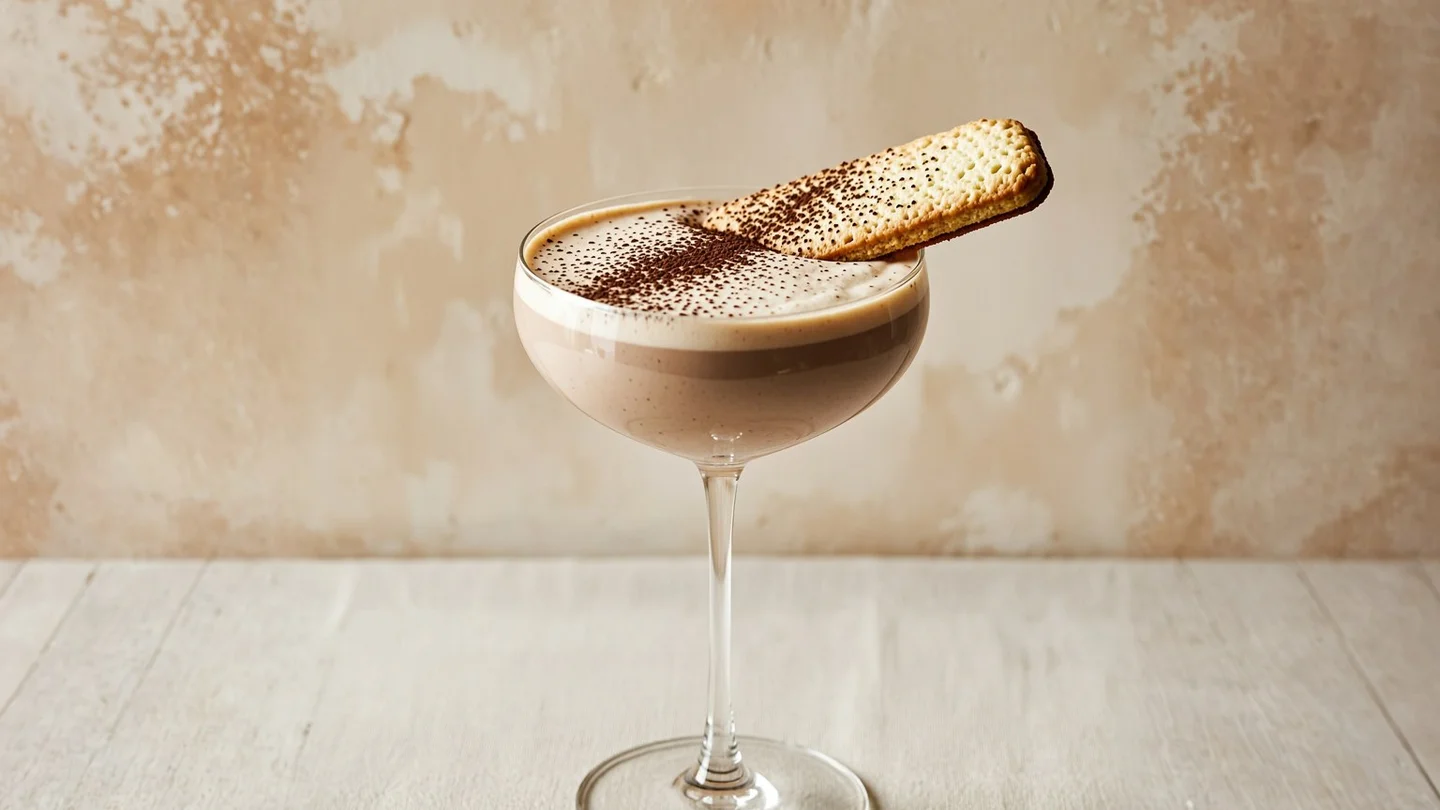
Tiramisu is a dessert with very few moving parts, which means every one of them shows. Mascarpone, eggs, sugar, savoiardi, coffee, cocoa — and, in most versions, a splash of something alcoholic. That splash is where people either lift the dish or flatten it, and coffee liqueur has quietly become the most common choice in home kitchens. It works. But which one you use, and how much, matters more than most recipes admit.
What the liqueur is actually doing
There are two places alcohol can go in a tiramisu, and they do different jobs.
The first is the soaking liquid. This is strong brewed coffee, cooled, with a measure of liqueur stirred through it. The savoiardi are dipped in it briefly and layered. This is the main event: it is where most of the aroma lives, and it is the layer your palate meets first because the biscuit sits directly under the cream.
The second is the mascarpone cream itself. A small amount folded into the sabayon adds a background warmth and, usefully, loosens the mixture a little. This is optional and easy to overdo — mascarpone splits if you add too much liquid to it, and the alcohol will thin the set.
In both cases you are seasoning, not flavouring. Nobody should take a forkful and think "coffee liqueur". They should think the coffee tastes better than it has any right to.
Marsala, and why coffee liqueur took over
The traditional choice is Marsala — a fortified wine from Sicily, usually the sweet dolce style, folded into the egg yolk sabayon. It is what most Italian recipes specify, and it is genuinely good: nutty, slightly oxidised, with a raisined depth that sits well against the cocoa.
The practical problem is that a bottle of Marsala is bought for one dessert and then sits in the cupboard oxidising. Coffee liqueur, by contrast, is already in the house if you make cocktails, and it reinforces the flavour the dessert is built around rather than introducing a second one. It is not a compromise — doubling down on coffee is a coherent choice, and arguably a cleaner one than the wine.
Dark rum and brandy are the other two common substitutions. Both work. Brandy in particular is closer to the Marsala effect than people expect, because you get fruit and warmth without the residual sugar.
You are seasoning, not flavouring. Nobody should take a forkful and think "coffee liqueur".
Why the base spirit matters here more than in a cocktail
This is the part most guides miss. In a tiramisu the liqueur gets heavily diluted — perhaps 50ml into 300ml of coffee, which is then soaked into biscuit and buried under cream. That dilution is brutal on anything without structure.
Most supermarket coffee liqueurs are built on neutral grain spirit or light rum. The neutral base contributes nothing but alcohol and viscosity. Put it into coffee and it simply disappears: you are left with sweetened coffee, which you could have made with sugar. The liqueur has spent its calories and given you nothing back.
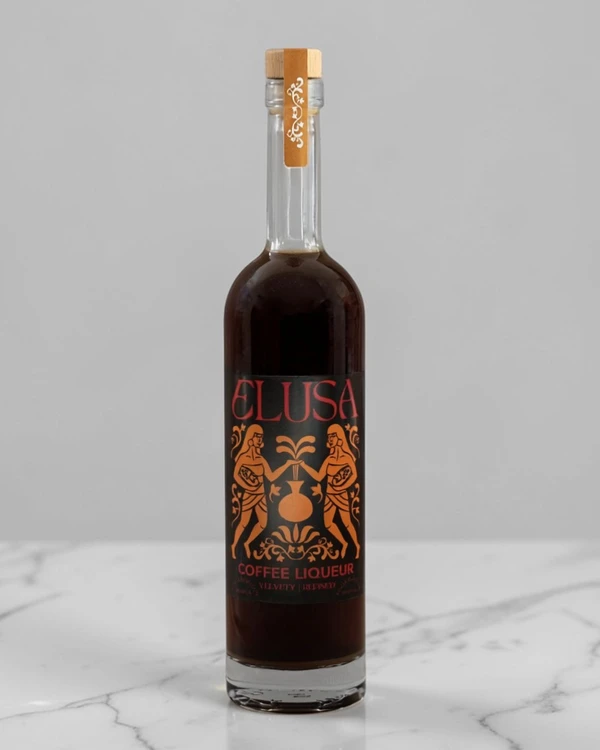
A spirit-based liqueur behaves differently, because the base itself has flavour that survives the dilution. Elusa Coffee Liqueur is built on Blanche Armagnac — unaged grape brandy from Gascony, no barrel, no vanilla-and-oak overlay. What that contributes to a tiramisu is fruit and lift: figs, caramel, dark chocolate, and enough backbone that you can still find it under the mascarpone.
It is, in effect, the brandy-in-tiramisu argument and the coffee-liqueur-in-tiramisu argument at the same time. That is the whole reason it exists in that form.
The sweetness problem
Tiramisu is already sweet before you add anything. There is sugar in the sabayon, sugar in the savoiardi, and the mascarpone brings its own richness. The cocoa on top is the only thing pulling in the other direction.
Mass-market coffee liqueurs are sweet by design — some carry over 400g of sugar per litre. Add 50ml of that to the soak and you have pushed the whole dessert over. The symptom is not that it tastes of liqueur; it is that the tiramisu tastes flat and cloying, and the coffee bitterness that should be cutting through has been buried. People usually blame the coffee.
This is the single most common way a home tiramisu goes wrong, and it is why a less-sweet, higher-strength liqueur is the safer choice. Elusa Coffee Liqueur sits at 21.5% ABV and is made with 100% Arabica, dark-roast, cold-brewed — cold extraction gives you the roast character without the harsh acidity, so the bitterness that remains is the useful kind. It reads rich rather than sugary, which is exactly what this dessert needs.
For the record on the awards, since it comes up: the liqueur itself holds a Great Taste 2026 1-star. Two of its ingredients — our Blanche Armagnac and the Dark Side cold brew coffee that goes into it — each hold Great Taste 2-stars in their own right.
How much to use
For a dish serving six to eight, 40–50ml in the soaking coffee is the working range. That is roughly a double measure across the whole tray. Start at 40ml if your liqueur is on the sweeter side.
If you also want it in the cream, add no more than 15ml to the finished mascarpone mixture and fold gently. Any more and you risk a loose set.
Restraint is the rule. You can always serve a small glass alongside; you cannot take it back out of the tray.
Technique notes that matter more than the recipe
Cool the coffee. The soaking liquid should be strong brewed coffee at room temperature or cooler. Hot coffee turns savoiardi to mush on contact and will start to cook the egg in the cream when the layers meet. Brew it first, before anything else, so it has time to sit.
Do not over-soak the biscuits. One to two seconds a side. They should still feel firm in the middle when you lay them down — they carry on absorbing for hours in the fridge, and a biscuit that felt properly soaked at the point of dipping will be a wet smear by the time you serve it. This is the second most common failure after sweetness.
Make it a day ahead. Tiramisu needs at least six hours in the fridge and is better at twenty-four. The layers need time to settle into each other and the alcohol needs time to stop reading as alcohol. Made and eaten the same afternoon, it tastes like separate components stacked up.
Dust the cocoa at the last minute. Cocoa dusted the night before absorbs moisture and goes patchy and damp. Do it just before it goes to the table.
Tiramisu with Coffee Liqueur (serves 6–8)
- 4 large eggs, separated
- 100g caster sugar
- 500g mascarpone, at room temperature
- 200g savoiardi (Italian sponge fingers), roughly 24
- 300ml strong brewed coffee, cooled
- 45ml Elusa Coffee Liqueur, plus 15ml for the cream (optional)
- Unsweetened cocoa powder, for dusting
- A pinch of salt
Brew the coffee first and leave it to cool completely. Stir in the 45ml of coffee liqueur and pour into a shallow dish wide enough to take a sponge finger.
Whisk the egg yolks with the sugar until pale, thick and roughly doubled in volume — three or four minutes with an electric whisk. Add the mascarpone in two or three additions, beating only until smooth. Stop as soon as it comes together; overworked mascarpone turns grainy. If you are using the optional 15ml in the cream, fold it in now.
In a clean bowl, whisk the egg whites with the pinch of salt to soft peaks. Fold them into the mascarpone mixture in thirds, using a spatula and a light hand. You want it aerated, not deflated.
Dip each savoiardi into the coffee for one to two seconds a side and lay them in a single layer in a dish of roughly 20 x 30cm. Spread over half the cream. Repeat with a second layer of dipped biscuits and the remaining cream, and level the top.
Cover and refrigerate for at least six hours, ideally overnight. Dust generously with cocoa immediately before serving.
If you would rather avoid raw egg whites, replace them with 200ml of double cream whipped to soft peaks and folded in the same way. The set is slightly firmer and it keeps a day longer.
The drinkable version
If you have the bottle open and no intention of making a dessert, the Tiramisu Martini gets you to roughly the same place in two minutes — coffee liqueur, cream and cocoa in a glass. It is a close cousin of the Espresso Martini, which is the serve this liqueur was built around in the first place.
The short answer
Use a coffee liqueur with a real spirit base and restrained sweetness, put 40–50ml in the cooled coffee rather than in the cream, dip the biscuits for a second a side, and make it the day before. If you want more on choosing a bottle generally, there is a fuller breakdown in our guide to the best coffee liqueur in the UK, and if it is the cocktail side you are after, making an espresso martini without Kahlúa covers the same base-spirit argument from the other direction.
For the tray and the glass
Elusa Coffee Liqueur. 700ml, 21.5% ABV. Armagnac base, dark-roast cold brew. Great Taste 2026 1-star. Made in small batches in England. Shipped across the UK.