
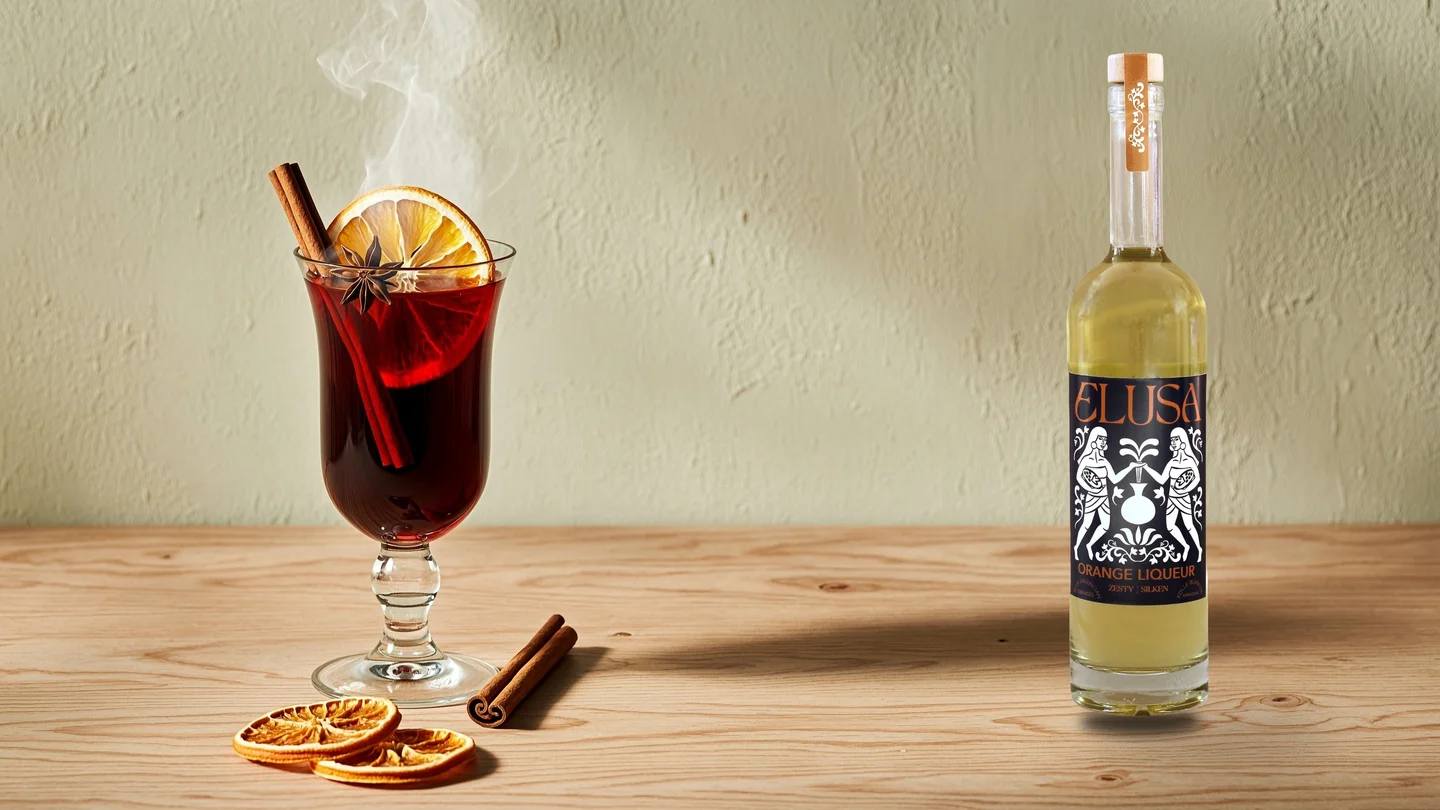
Almost every mulled wine recipe tells you to add a spirit. Almost none of them tell you when. That single detail decides whether your pan tastes like warm spiced wine with something interesting in it, or like warm spiced wine with a faint chemical edge where the good stuff used to be. If you are adding an orange liqueur — and you should — it goes in at the end, off the heat, and never anywhere near a simmer.
Why mulled wine should never boil
Two things happen when a pan of mulled wine gets too hot. The obvious one is that alcohol starts to leave. Ethanol boils at 78°C, so once the surface is moving you are steadily driving off the wine's strength and, more importantly, the spirit you just paid for.
The less obvious one matters more. The aromatic compounds that make citrus smell like citrus — limonene and the other oils in orange zest — are volatile, and they go long before the alcohol does. Boil your mulled wine and you keep the sugar and the heavy spice but lose the top notes that gave it lift. What is left is flat and slightly stewed.
The target is 70–80°C: hot enough to drink and to draw flavour out of the spices, well below anything that bubbles. If you have a thermometer, use it. If you do not, the visual cue is steam with no movement in the liquid. The moment you see the surface tremble, pull the pan off.
Why orange is the right partner for mulling spice
This pairing is not arbitrary. Cinnamon, clove, star anise and nutmeg are all warm, dry and slightly resinous. On their own in hot wine they turn heavy quickly — you get depth but nothing to break it up. Orange does the breaking up. The acidity cuts the sugar, the zest oils sit right on top of the spice aromatically, and the bitterness from the pith stops the whole thing sliding into squash territory.
Sliced fresh orange in the pan does part of this job. It is not enough on its own, because a slice of fruit simmering in wine gives up its juice readily but its oils poorly, and what oils it does release are the first casualties of the heat. That is the gap an orange liqueur fills — added late, it puts concentrated orange back in at the point where nothing can boil it away again.
Everything before the liqueur is extraction. The liqueur is the part you are trying not to lose.
Whole-fruit liqueur versus triple sec
A standard triple sec is peel extract: dried orange peels macerated and distilled in neutral alcohol, then sweetened. It is bright, sharp and quite narrow. In a shaken cocktail, where nothing else is competing on the same axis, that narrowness is a virtue — it cuts clean.
In a pan of mulled wine it is a liability. You have already got cinnamon and clove filling the room. A peel-only liqueur goes in, contributes a brief citrus flash and then vanishes underneath the spice. You end up adding more, which adds sugar and alcohol without adding much orange.
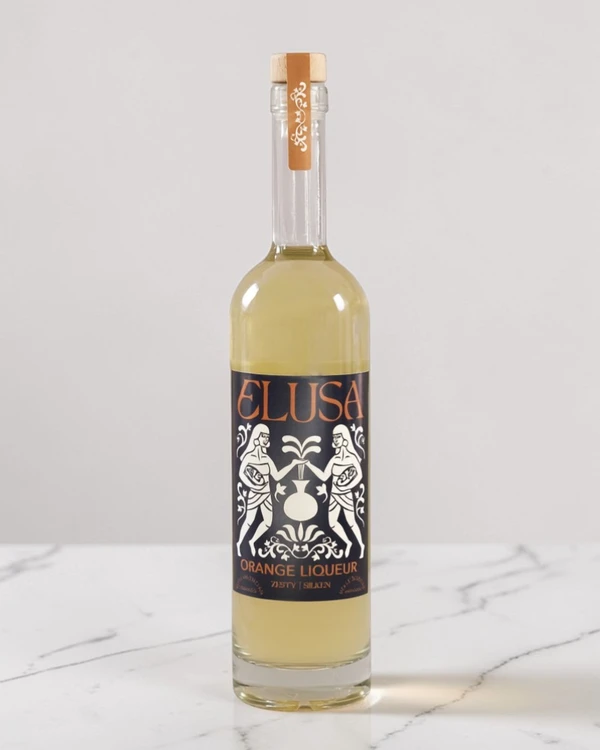
Elusa Orange Liqueur behaves differently in this setting because it is made from the whole Spanish orange — juice, zest and pith — rather than dried peel alone. The juice gives it body and a proper fruit character that carries under the spice rather than sitting on top of it and evaporating. The pith gives a bitterness that reads as structure once there is sugar and cinnamon in the glass. And the base is Blanche Armagnac from Gascony rather than neutral alcohol, which means the spirit itself brings pear and stone fruit instead of nothing at all. At 21.5% ABV it is built to be tasted rather than to add heat, which is exactly what you want in something going into an already-alcoholic drink.
If you want the longer argument about whole fruit versus peel extract, it is set out in our guide to choosing a Cointreau alternative.
Choosing the red wine
The single most common mistake after boiling is reaching for the wrong bottle. You want something fruity, juicy and low in tannin. Garnacha, Merlot, a young Côtes du Rhône, an inexpensive Chilean Merlot or a soft Portuguese red all work well.
What you must avoid is a tannic red. Tannin is astringent at room temperature and becomes considerably harsher when heated and concentrated. A young Cabernet Sauvignon, a Malbec, a structured Barolo — all of them turn bitter and drying in the pan, and no amount of sugar fixes it. Heat exaggerates tannin; it does not soften it.
The other half of that rule: do not use anything you would want to drink on its own. This is not snobbery in reverse. A good bottle's complexity is built around subtleties that simply do not survive 75°C and a fistful of cloves, so you are paying for nuance you are about to destroy. Somewhere in the £6–9 range, chosen for fruit rather than structure, is the right bottle.
The recipe
This makes roughly 1 litre from a standard 750ml bottle, which is six generous mugs. Scale it by whole bottles; the spice quantities scale with it.
Mulled Wine with Orange Liqueur
- 750ml fruity, low-tannin red wine
- 150ml water
- 60g caster sugar (or 3 tbsp honey)
- 1 orange, half sliced into rounds, half kept for peel
- 2 cinnamon sticks
- 4 whole cloves
- 2 star anise
- 4 green cardamom pods, lightly crushed
- 1 bay leaf
- 100ml Elusa Orange Liqueur, added off the heat
1. Make a spiced syrup first. Put the water, sugar, cinnamon, cloves, star anise, cardamom, bay leaf and a few wide strips of orange peel into your pan. Bring it to a gentle simmer and hold it there for five minutes. Doing this in water rather than wine gets far more out of the spices, because you can apply real heat to it without anything alcoholic to lose.
2. Add the wine and the orange slices. Pour in the whole bottle and drop in the orange rounds. Bring the pan up slowly to 70–80°C — steaming, never bubbling — and hold it there for 20 minutes. On most hobs that means the lowest setting. Do not walk away during the first five minutes; that is when it gets away from you.
3. Taste and adjust. It should be spiced but not medicinal. If the cloves are dominating, fish them out now. If it is too sweet, a squeeze of the remaining orange half fixes it faster than more wine.
4. Take the pan off the heat, then add the liqueur. Off the hob, not just turned down. Stir in the 100ml of Orange Liqueur and let it sit for two minutes. You will smell the difference immediately — the orange comes back up over the spice, which is precisely what the 20 minutes of heating had flattened.
5. Strain and serve. Ladle through a sieve into warmed mugs or heatproof glasses. Garnish with a fresh orange slice and a cinnamon stick if you want the picture as well as the drink.
If it needs reheating later, reheat gently and add a small additional splash of liqueur off the heat before serving. A second warming always costs you some aromatics.
A lighter version, and one without alcohol
For something less heavy over a long evening, replace 250ml of the wine with an equal amount of pressed apple juice and reduce the sugar to 40g. Keep the liqueur measure the same. It drinks at closer to 6% and holds its flavour better than watering it down.
For a non-alcoholic pan, build the same spiced syrup and use 750ml of cloudy apple juice with 250ml of strong hibiscus tea in place of the wine — the hibiscus supplies the tannin and colour that the juice lacks. You lose the liqueur step, so compensate with the zest of a whole orange stirred in at the very end, off the heat. It is not the same drink, but it is a proper one rather than warm juice.
What to do with the rest of the bottle
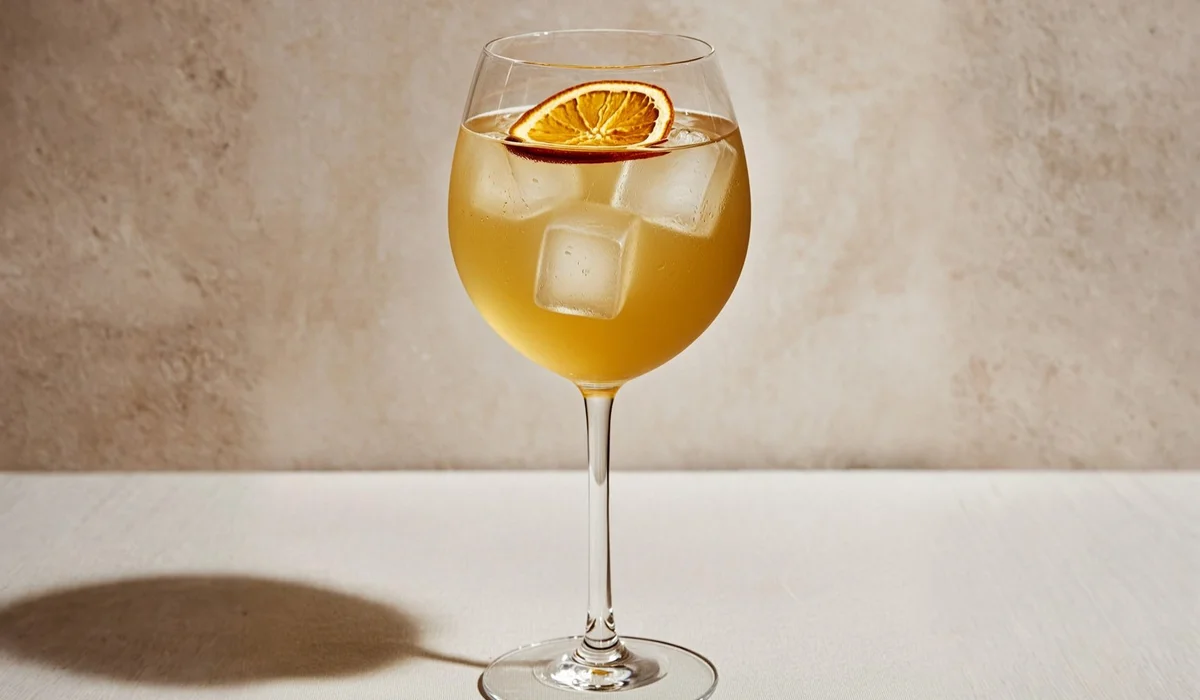
Mulled wine is seasonal; a bottle of orange liqueur does not have to be. The same whole-fruit character that survives a pan of spice also carries a long drink — an Orange Spritz is the standard serve here, and an Orange Tonic is the two-ingredient version. It also does the classic modifier jobs; we have written separately about which orange liqueur to use in a margarita.
It is made with our Great Taste 2-star Blanche Armagnac as the base spirit, which is the reason there is something underneath the orange rather than just alcohol.
The short version
Pick a fruity, low-tannin red you would not drink on its own. Extract your spices in water first. Keep the pan at 70–80°C and never let it bubble. Add the orange liqueur off the heat at the very end, and use one made from whole fruit so it is still there when it reaches the glass.
For the pan this winter
Elusa Orange Liqueur. 700ml, 21.5% ABV. Whole Spanish oranges on a Blanche Armagnac base from Gascony. Shipped across the UK.